How to Modernize APAC Procurement: A Step-by-Step Sourcing Guide
August 15th, 2026
No Comments
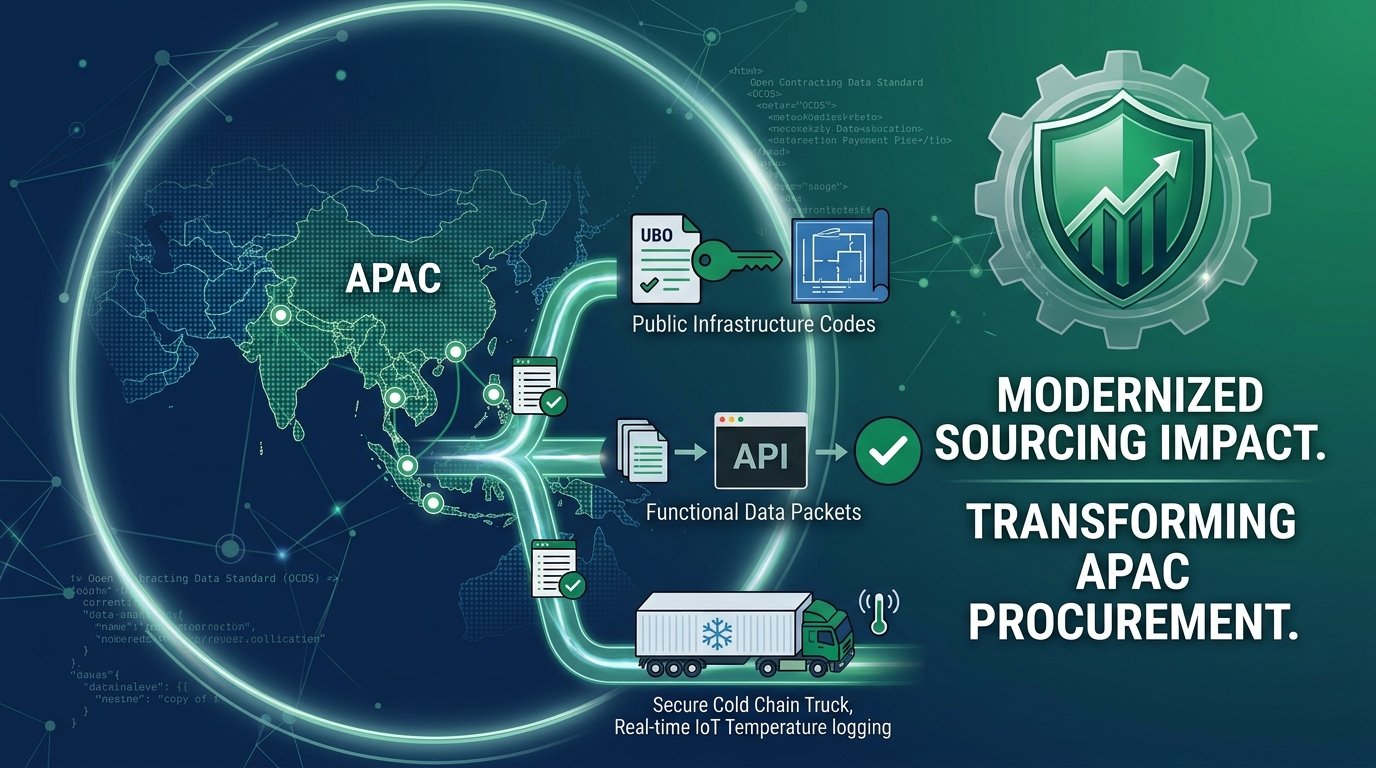
Procurement teams across the Asia-Pacific region is shifting. Rising compliance mandates, supply chain volatility, and statutory shifts, such as the Asian Development Bank (ADB) mandatory Merit Point Criteria and regional frameworks like the Philippine New Government Procurement Act (RA 12009), are pushing organizations away from rigid, low-bid sourcing. Modern procurement demands total life-cycle value, transparent vendor evaluation, and inclusive supplier access.
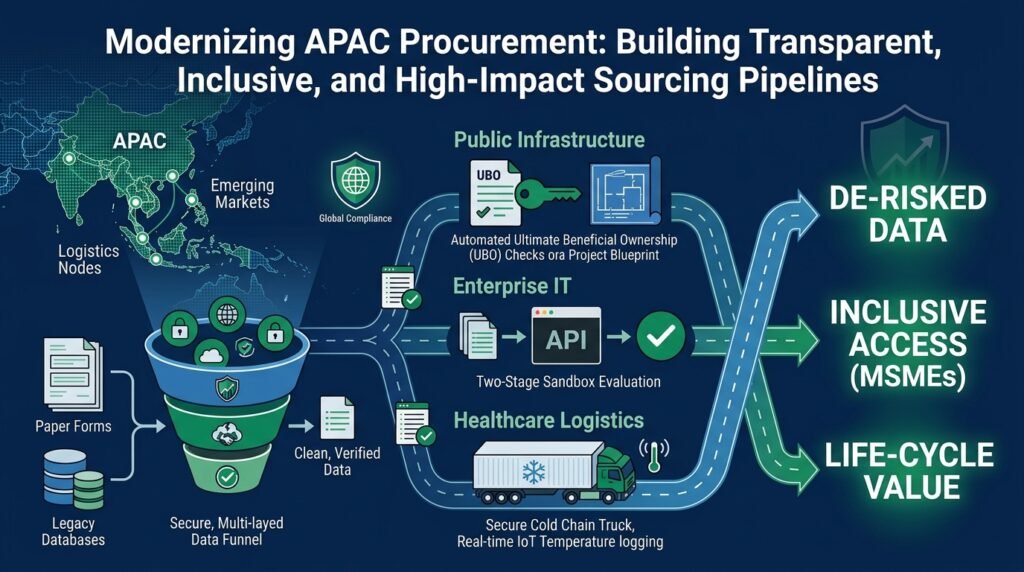
This guide breaks down actionable sourcing frameworks across three critical verticals: public infrastructure, enterprise IT, and healthcare logistics.
Vertical Breakdown: Sourcing Challenges & Modern Standards
Real-time IoT temperature logging; automated GDP license verification.
Strategic Sourcing Blueprints by Sector
1. Public Infrastructure: Transitioning to Life-Cycle Quality
Legacy “Lowest Calculated Responsive Bid” models frequently lead to long-term budget overruns and delayed projects. Implementing Most Economically Advantageous Responsive Bids (MEARB) ensures that quality, maintenance costs, and environmental impact factor directly into award decisions.
Automate Ownership Vetting: Require digital tender advertising platforms to validate Ultimate Beneficial Ownership (UBO) data automatically, flagging cartel bidding and shell entities before unsealing bids.
Standardize GEDSI Scoring: Embed explicit evaluation points for tenders that demonstrate inclusive hiring practices, accessible infrastructure designs, and local supply chain capacity building.
Publish Accessible Notices: Format all tender announcements to meet WCAG 2.1 AA standards so assistive technologies can parse requirements without friction.
2. Enterprise IT: De-Risking Sourcing via Two-Stage Tenders
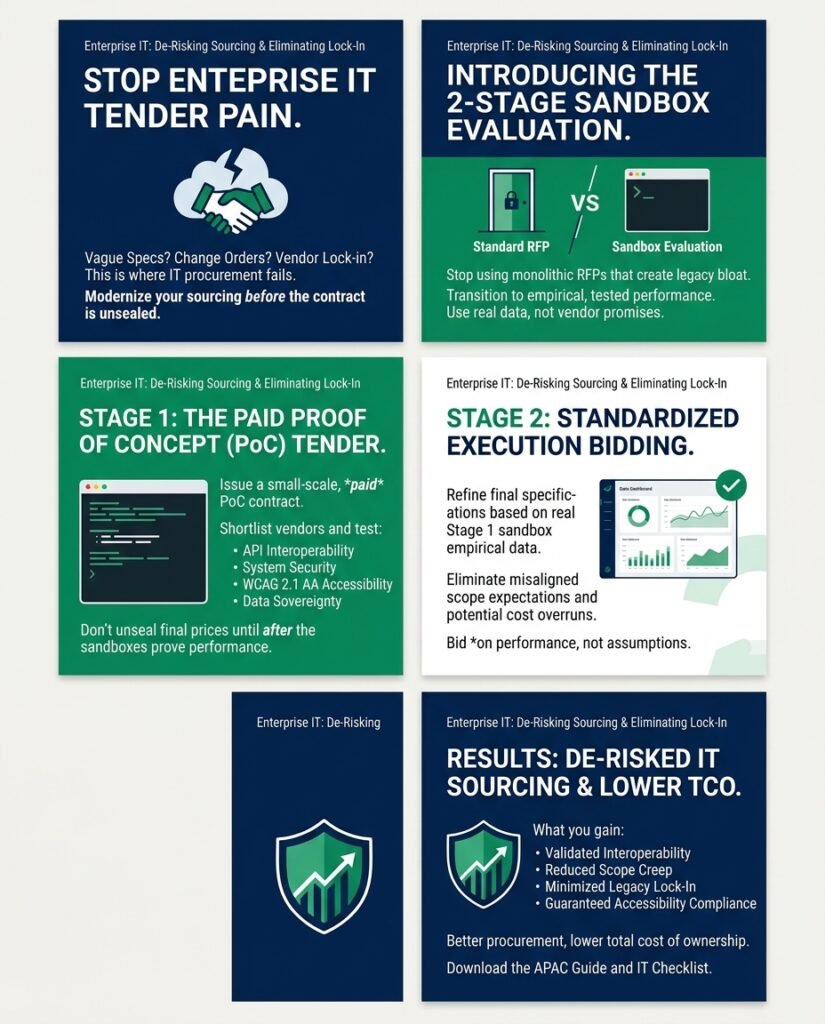
Monolithic Requests for Proposals (RFPs) often force enterprise IT buyers into costly change orders and legacy software lock-in. A structured two-stage sandbox framework aligns operational goals before final commercial contracts are signed.
Stage 1 (Paid Proof of Concept): Issue a short-term sandbox tender where shortlisted vendors test API compatibility, system interoperability, and data security in a controlled environment.
Stage 2 (Execution Bidding): Refine final contract specifications using empirical data gathered during Stage 1, eliminating ambiguous scope expectations.
Technical Safeguards: Mandate open formats and clear exit protocols in early tender specifications to protect data portability and regional privacy compliance.
Distributing pharmaceutical supplies across complex regional geographies requires agile networks that react quickly during public health emergencies. Static vendor lists and manual compliance reviews create dangerous bottlenecks.
Deploy Dynamic Framework Agreements: Establish pre-negotiated, option-based contracts with pre-vetted regional logistics providers, enabling rapid purchase order issuance during dynamic demand shifts.
Automate License Verification: Connect tender portals directly with national health authorities to verify Good Distribution Practice (GDP) handling certifications automatically during bid submission.
Mandate IoT Visibility: Require bidders to integrate real-time temperature tracking and accessible status dashboards from warehouse departure to final delivery.
4-Step Checklist for Sourcing Modernization
Standardize Tender Metadata: Structure all tender notices using universal categorization codes (such as UNSPSC) so qualified suppliers receive timely, automated alerts.
Shift Verification Upstream: Validate baseline business registrations, tax clearances, and safety certifications before technical evaluations begin.
Embed Accessibility & Inclusion: Audit bid submission workflows to remove artificial barriers for Micro, Small, and Medium Enterprises (MSMEs) and diverse suppliers.
Publish Machine-Readable Data: Align public notices with Open Contracting Data Standards (OCDS) to foster market trust and improve audit efficiency.
Subscribe to our Newsletter to receive latest industry news and information about selected tenders in the region. You can unsubscribe any time under your account settings