


In an MDPI study on Vietnam’s water resources published in Sustainability, while Vietnam’s location, geography, and climate make the country abundant in water sources, its rapid urbanization and industrial growth are putting unprecedented pressure on its water supply systems. With pollution, over-extraction, and climate shifts, many issues jeopardize Vietnam’s water resources. Against this backdrop, initiatives involving Vietnam’s water infrastructure expansion would not just be beneficial to the current state of water systems in the country but would also be future-proofing a resilient and reliable access to clean water for many.
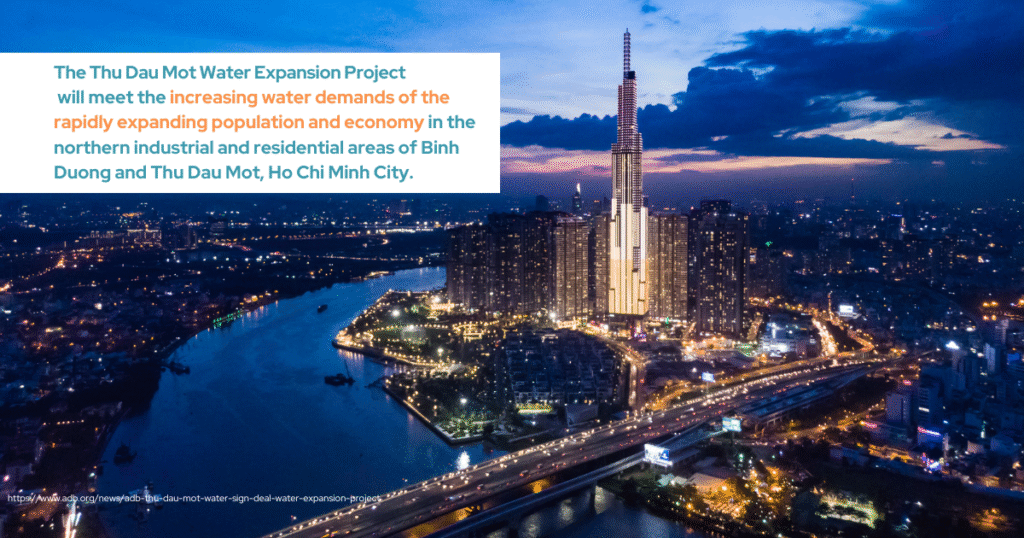
In early August of 2025, the Asian Development Bank (ADB) and Thu Dau Mot Water Joint Stock Company (TDM), through a $6 million non-sovereign loan, promoted Vietnam’s water infrastructure expansion by expanding the Bau Bang water treatment plant and pipeline system. This project will meet the increasing water demands of the rapidly expanding population and economy in the northern industrial and residential areas of Binh Duong and Thu Dau Mot, Ho Chi Minh City.
![“The expansion of the Bau Bang water treatment plant is essential to ensure [a] clean and reliable water supply for local consumers [and] existing businesses, as well as prospective investors looking to establish a presence in the Southern Key Economic Zone of Viet Nam,” said ADB Country Director for Viet Nam Shantanu Chakraborty. He added that this initiative will support ongoing economic growth, job creation, and foreign direct investment in the country.](https://apactenders.com/wp-content/uploads/2026/03/image-8-1024x538.png)
The loan, co-financed equally by the Japan International Cooperation Agency, will increase the plant’s capacity from 30,000 to 80,000 cubic meters per day, guaranteeing a steady supply of clean water for local communities and the growing commercial and industrial sectors.
“The expansion of the Bau Bang water treatment plant is essential to ensure [a] clean and reliable water supply for local consumers [and] existing businesses, as well as prospective investors looking to establish a presence in the Southern Key Economic Zone of Viet Nam,” said ADB Country Director for Viet Nam Shantanu Chakraborty. He added that this initiative will support ongoing economic growth, job creation, and foreign direct investment in the country.
One of the most urgent issues facing the world today is water scarcity, which has an impact on communities, businesses, and ecosystems. Around 1.1 billion people worldwide lack access to clean water, and climate change is making matters worse by making droughts and floods more severe, according to the World Wide Fund for Nature (WWF).
The human cost is especially high: according to Water.org, 2.2 billion people globally lack access to safe drinking water, and a child passes away from a water-related illness every two minutes. International funding, local collaborations, and sustainable procurement can help close the gap by lowering health risks, enhancing livelihoods, and promoting equitable growth, as demonstrated by initiatives like this Thu Dau Mot Water Expansion Project
The article published in Sustainability reveals a range of pressures that risk the long-term stability of supply systems, as shown by studies on Vietnam’s water resources. Excessive groundwater extraction has previously caused land subsidence and stressed river flows, often driven by rapid urbanization and agricultural demand.
In the same study, it says that urban discharge, agricultural runoff, and untreated industrial wastewater are all contributing to the degradation of surface and groundwater quality, with arsenic contamination presenting a special health danger. As the dependability of freshwater sources is increasingly threatened by altered rainfall patterns, more severe floods and droughts, and saltwater intrusion, climate variability exacerbates these issues. A recent MDPI study on water security in Vietnam found that these interrelated problems underscore the pressing need for integrated management approaches to safeguard the nation’s future supply.
The project aligns with the government’s equitization measures, which aim to transfer state-owned businesses to private-sector utilities. ADB supports this shift to improve operational efficiency and help reduce public and publicly guaranteed debt in Vietnam’s infrastructure sector.
ADB’s Water Organization Partnership for Resilience Program will also provide TDM with technical help and information. Staff members will receive capacity-building training from the program in critical areas such as carbon neutrality, smart energy management, and water ecological management. In collaboration with Korea Water Resource Corporation, a well-known leader in water management worldwide, the training will be provided.