


According to the Food and Agriculture Organization, rice is a staple in the diet of many people in Asia and some parts of the Pacific. The Asia-Pacific (APAC) region produces and consumes more than 90% of the world’s rice. However, rice production is also facing immense pressure due to its substantial contribution to climate change and dwindling water supplies. With this, it is imperative to form initiatives that would transform the rice sector in APAC by making farming more resilient, sustainable, and inclusive.
To improve the lives of millions of vulnerable smallholder farmers throughout Asia and the Pacific, the Asian Development Bank (ADB) and CGIAR announced on June 9, 2025, a new program to increase investments in low-carbon and sustainable rice production, with assistance from the Gates Foundation. The pilot initiatives are under development in China, Bangladesh, Cambodia, Pakistan, and the Philippines.
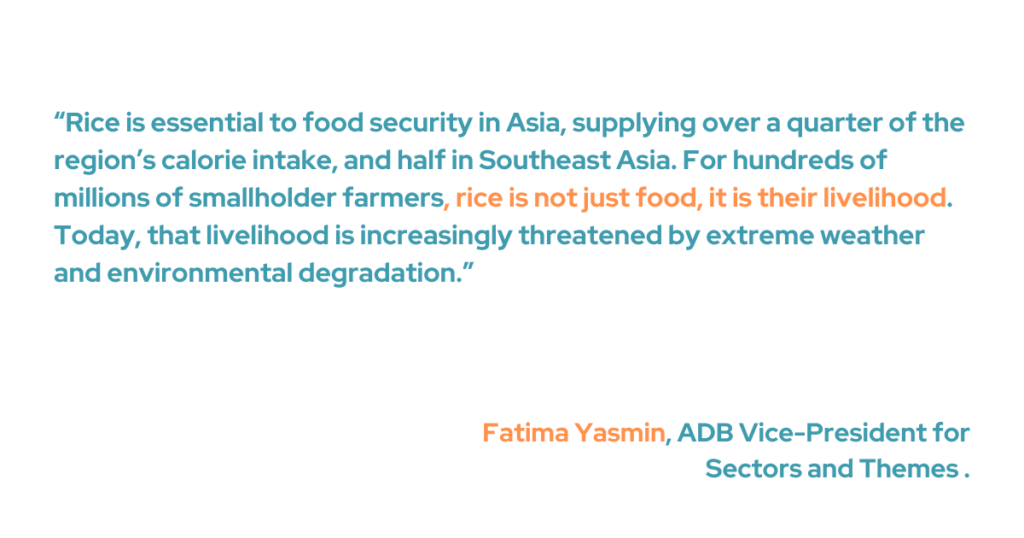
ADB Vice-President for Sectors and Themes Fatima Yasmin affirmed how essential rice is to food security in Asia, as it is the source of more than a quarter of the region’s caloric intake and 50% in Southeast Asia. “For hundreds of millions of smallholder farmers, rice is not just food; it is their livelihood. Today, that livelihood is increasingly threatened by extreme weather and environmental degradation,” she added.
ADB research shows that despite rice’s central role in food security, many farms continue to experience low yields due to degraded soils, outdated farming practices, and limited access to technology. If these productivity gaps go unaddressed, Asia could face a rice shortfall of more than 100 million tons by 2030.
However, rice cultivation is responsible for around 10% of the global methane emissions, primarily from man-made activities such as burning rice straws and flooding paddy fields, according to the International Rice Research Institute (IRRI). If these issues persist, food security and the welfare of the most vulnerable and impoverished populations are at risk.
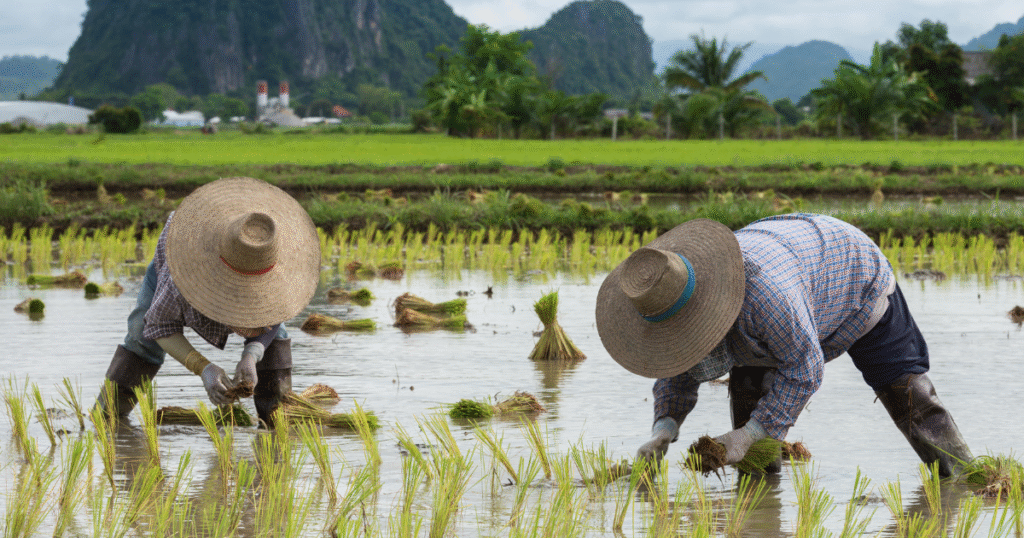
The initiative—co-financed by the Gates Foundation and supported by the recently established ADB–CGIAR Clearinghouse Facility—intends to strengthen inclusive value chains, encourage sustainable water management, improve nutrition for the most vulnerable populations in the region, and promote resilient, high-yield, and low-emission farming practices.
Between 2025 and 2030, the multilateral development bank intends to invest up to $1.5 billion in this program to reduce carbon emissions and water use, strengthen resilience to climate change, and boost production sustainably. This effort, announced in May 2025, is part of ADB’s larger $40 billion pledge to improve food systems by 2030.
Through the integration of funding, field innovation, and policy assistance, this collaboration serves as an example of how to transform the rice sector in APAC into a force for rural prosperity and environmental sustainability. This partnership can serve as a blueprint for growing climate-smart agriculture while assisting smallholder rice farmers who are most negatively impacted by climate change.
According to Yvonne Pinto, director general of IRRI, the collaborative effort will improve CGIAR’s partnership with ADB and broaden the application of CGIAR’s breakthroughs in rice systems and other fields. “Alongside partners such as ADB and the Gates Foundation, we can drive sustainable and resilient transformation of the rice sector in Asia and transform the lives of millions of smallholder farmers now and in the future.”