



India is considered one of the countries most affected by the impacts of climate change. According to a report, while the country dropped in rank—from seventh in 2019 to 49th in 2022—India still ranked sixth among countries in the climate risk index (CRI) over the past 30 years. Therefore, transitioning to green energy represents a significant step toward enhancing climate action in India. Initiatives that strengthen investments in clean energy by both the private and public sectors in India will not only help the country meet its environmental goals but also ensure long-term energy security.
To expand renewable energy in India, the Green Climate Fund (GCF) and the Asian Development Bank (ADB) have unveiled a new US$200 million concessional financing program. This funding will support the India Green Finance Facility (IGFF), which is a pioneering blended finance initiative designed to attract the private sector and top development finance institutions (DFIs) to engage in cutting-edge clean energy technologies, including green hydrogen, energy storage, and low-carbon transport. ADB will use this facility to support credit lines with eligible national DFIs, who will be in charge of creating the project pipeline.
According to the ADB ESMF document of the program, by integrating environmental considerations into financial decision-making, IGFF will help India meet its emission targets under the Paris Agreement.
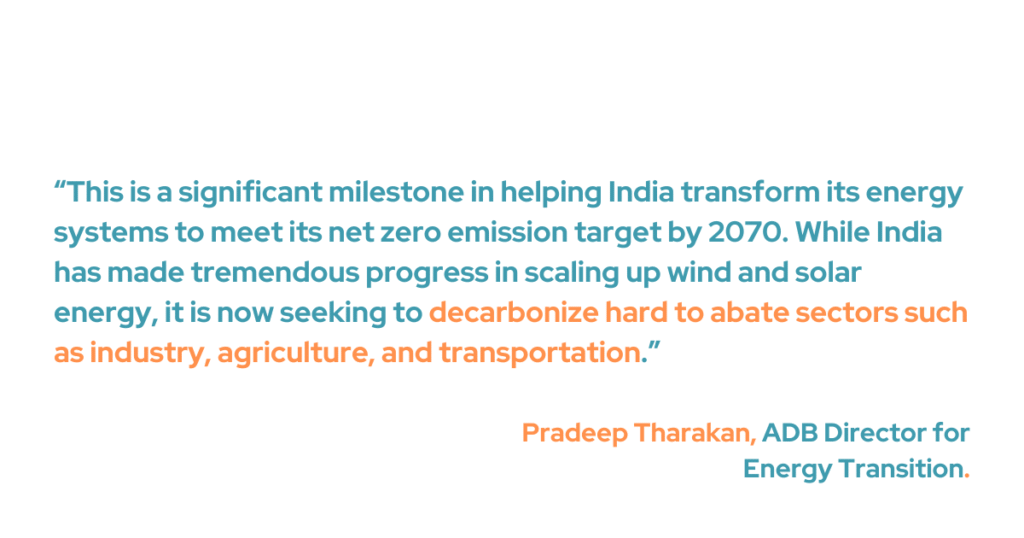
ADB Director for Energy Transition Pradeep Tharakan underscores the significance of this program in helping India’s energy systems transition to achieve net-zero emissions by 2070. “While India has made tremendous progress in scaling up wind and solar energy, it is now seeking to decarbonize hard-to-abate sectors such as industry, agriculture, and transportation,” he added.
India’s progress towards renewable energy has advanced significantly. According to a report by The Telegraph India in July 2025, almost half, or 46%, of India’s electricity generation is from non-fossil fuel sources. Still in 2023, the IEA reported that 74% of India’s electricity generation is from coal, and it was the third largest consumer of energy due to its growing economy.
C&En also wrote that while the renewable and clean energy capacity of India has increased fivefold since 2014, less than 20% of the actual power used originates from renewable sources. It also reported that experts predict that India’s economy, which is expanding quickly, will continue to rely on coal. Due to the improving standards of living in India, a rapid increase in energy demand is expected in the upcoming years, making it difficult for renewable sources to significantly expand their share of the country’s power consumption needs, according to a C&En interview.
This dual reality highlights the value of blended finance approaches, such as the IGFF, which aim to complement national energy agendas and make climate-aligned technology financially feasible.

The IGFF, ADB’s first collaboration with the GCF in India, will enhance the capacity of the country’s financial institutions to scale up climate action and promote the use of new clean technologies throughout the country. IGFF will roll out in two phases, focusing on three main objectives: expanding clean energy, strengthening DFIs’ capacity to issue green loans, and promoting gender inclusivity.
One of the main innovations of the IGFF is the establishment of a risk-sharing facility worth $65 million. For compressed biogas projects, which commercial lenders sometimes ignore because of the inherent hazards, this will offer partial credit guarantees to assist smaller developers in obtaining reasonable financing.
The India Green Finance Facility may be a model for other nations looking to expand clean energy while negotiating budgetary constraints because of its tiered funding structure and risk-sharing instruments. It facilitates communication between the pragmatic requirements of private-sector developers and high-level climate ambition, especially in underserved areas of India’s energy landscape.
Collaborations such as this ADB-GCF project highlight the vital role that blended finance, regional institutions, and international collaboration play in boosting clean energy in India as the country continues its transition to a cleaner, more resilient energy future.